When Tom and I first moved here after our marriage three years ago, we began to photograph the wild flowers we discovered on our outings. With his support and encouragement, I had taken up watercolour painting and the photographs provided a valuable reference resource. For many years in the UK I had written craft and cookery books and had taught skills such as embroidery, lace making, and decorative paint effects in the public and private sectors, but I had never found the confidence to try my hand at ‘fine art’. My first efforts were pretty average, as you can see from this early attempt at an aubergine. The standing joke, as I struggled with glazes and colour mixing, was that with determination, I could become Crete’s best vegetable painter.
But then, fortunately, I was introduced to an excellent and gifted botanical artist in the UK. Under her guidance, my confidence blossomed, as I spent time and effort mastering the techniques and developing my own ‘style’.
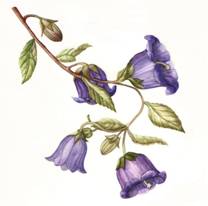
Our photo collection was growing and in an effort to share the beauty of Crete’s flowers with others, Tom set up a website on which we made our Flower Calendar. To our amazement, this has proved unbelievably popular.
So last year, in response to this worldwide interest, we decided to form a charitable trust for the protection and study of the wild flowers of the island. There are around 170 wild flowers that grow only on Crete – some in very restricted locations and some that are protected by International and National Legislation. Like, for instance, the stunningly beautiful Crocus oreocreticus. This Crocus grows in the mountains of Eastern Crete and it is listed as ‘vulnerable’. One of our aims is to promote awareness and a responsible attitude amongst locals and visitors alike.
One of our challenges for 2006 is to encourage builders, developers and private owners to inform us of any ‘retrievable’ plant material on land that is earmarked for the bulldozer. We hope to set aside land in various parts of the island to be maintained as mini nature reserves and it is here that rescued bulbs and seeds will be re-homed. We realise that it is impossible to prevent the coastal tourist development or the increased use of chemical sprays on agricultural land, but it is possible, with the help of the community, to sustain populations of wild flowers in this way.
FloraCretica is still in its infancy, but it has already given birth to FloraMundi – an umbrella website that will encourage the work in other parts of the world. Last year FloraCretica applied for and was granted membership of the prestigious international organisation PlantaEuropa and we hope to lobby for the recognition of Crete as an Area of Special Interest. This will result in grants being made available from the European Community for protection and preservation projects. In addition, our images of endangered species on Crete can be found on the International database ARKive. Here visitors can see Origanum dictamnus – Cretan dittany, Phoenix theophrasti – the Cretan Palm and many more.
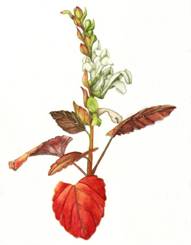
Many botanists have already made Crete the subject of their research and last year saw the publication of The Flowers of Crete by John Fielding and Nicholas Turland. This book is a must for anyone with more than a passing interest in the flora of Crete and, indeed, the Mediterranean area. As non-botanists, it is an invaluable resource for us in the identification of the plants and flowers we photograph and draw. In addition, many Greek naturalists have published excellent books for visitors on all aspects of Greek and Cretan wildlife and with the help of our many friends here and internationally, we hope to extend and promote their work.
In 2006, we will be actively recruiting new members. We hope to produce T-shirts, greeting cards, posters and ceramic mugs for sale to visitors in order to spread the word and ‘get the message across’. During the summer months we will be mounting an exhibition of watercolour paintings of endemic and endangered flowers and I will be travelling to England to take courses and to spread the word. In retirement, my lifelong love of wild flowers is turning into a full time job – and I love it.
By Julia Feise – www.floracretica.gr