Signs of progress at former air base site in Gournes
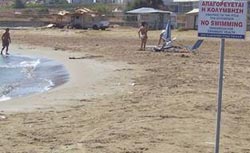 The municipality of Gouves, in which the former U.S. Air base at Gournes is located, has reported some progress in its continuing efforts to get the property cleaned up. (Editor’s Note: see: THE FORMER U.S. AIRBASE: CRETE’S PRIVATE SLUM in the August edition).
Gouves Mayor D. Blavakis told the Crete Gazette that the problem with the biological processing plant located at the site, which has been broken for years, has been finally solved and swimming in the area should return to normal within days. Due to the problems with the plant, raw sewerage has been flowing into the sea, necessitating a ban on swimming. Mr. Blavakis said the “no swimming” signs will be removed as soon as a final testing of the waters is completed.
Meanwhile, a general clean-up of the area, which has fallen into slum-like conditions since the U.S. Air Force returned the property to the Greek government 11 years ago, is expected to begin shortly. Mr. Blavakis said that all parties concerned are acutely aware of the existing situation and are committed to getting the problems corrected as soon as possible.
Apparently, the delay in getting the area in shape has to do with an enormous amount of that hindering adhesive material so prevalent in Greek government – Red Tape. When the American Air Force turned the keys to the property back to the Greek government, no one was quite sure what to do with it. Here were hundreds of acres of prime seaside real estate with paved roads and numerous quality-constructed buildings, and everybody wanted a piece of it. There were talks of five-star resorts, a high-income residential community, a major hospital and teaching complex, a theme park, etc.
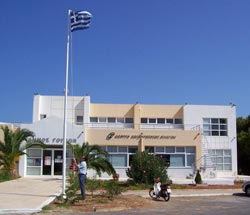 Eventually the base fell into the hands of a division of the Ministry of Finance – a special organization created for the management of land in Greece. In recent years it has leased relatively small sections of the land to the Greek Air Force for officers’ housing; an exhibition centre; the municipality of Gouves, which includes a town hall (pictured right), a school, fire station, etc., and the Hellenic Centre for Marine Research (HCMR), which includes the soon-to-be-opened CretAquarium.
Thalia Polychronaki, a spokesperson for HCMR and the aquarium, supported Mayor Blavakis’ announcement that a general clean-up will get underway in the very near future. She said that the municipality has been working closely with the aquarium in preparation for its planned opening this fall.
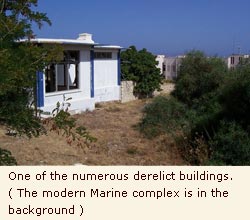 “When we open our doors, thousands of visitors will be making their way onto the property,” Mrs. Polychronaki told the Crete Gazette. “Neither the municipality nor the institute want them to see the surrounding area in the condition that now exists.” She said the plans are for a general clean-up of the area – cutting of weeds, landscaping and removal of the people who have set up illegal seaside housekeeping. “We’re realistic,” Mrs. Polychronaki said, “and we don’t expect to see the abandoned buildings razed or renovated anytime soon. We know the cost would be prohibitive. However, a general clean-up and improvement would make a big difference in making the area more pleasing to visitors, and I’m confident that it will be done.”
Mayor Blavakis, in announcing the impending refurbishment of the property, made no mention of the derelict buildings. He did indicate, however, that the managing agency of the base property was planning to entertain proposals from “strategic investors,” such as HCMR and the exhibition centre – multi-million euro projects with long-term leases. When these enterprises come to fruition, the existing buildings will be razed completely or perhaps renovated for present-day use.
What an enormous blot on the landscape. The Greek authorities need to sort this; it’s a disgusting disgraceful eye saw!
A real blot on the landscape of Gouves. Would be great if some of the history of the site could be preserved and on put on show to educate future generations.
They have.The main gate was repaired to look like it was when the base was operating.History photos in each window.I was stationed there for over 6 years.